There is a quiet revolution happening right under the noses of most marketers. And it's not happening in boardrooms or award-winning creative agencies. It's happening on Discord servers, in TikTok comments, on Reddit threads, and in the Artist Alleys of conventions.
It's called fandom. And for those who still think this is just about teenagers obsessed with K-pop bands, there's an important train that may be passing you by.
A new system of influence
A study by Ogilvy Consulting has just been released that should set off alarm bells (or bells, depending on which side you're on) in every marketing department across the country. The data is crystal clear:
- 86% of Generation Z identifies as a fan of something
- 91% of young people aged 18-25 say that there is no longer a single "mainstream" culture
- Half of Gen Z say their fandoms help them make sense of the world
- 75% of young fans say they are more likely to buy from a brand that sponsors or creates content related to their fandom.
It is worth noting the last figure. Three quarters. That is not 10% or 20%. It is three out of every four young people willing to consider a brand if it enters their fandom in the right way.
But here's the problem: the right way isn't what most brands think.
The mistake that 90% of brands are making
For years, the marketing playbook was simple: identify the relevant celebrity or cultural moment, pay to be associated with it, and wait for the ROI.
That model has withered away.
 Today, when Beyoncé mentions "Levi's" in a song, the brand not only sees sales skyrocket by 20%, but store traffic increases by the same amount. But it's not Beyoncé who creates the result — it's her fans. They are the ones who turn a reference into a trend. They are the ones who search for "women's Levi's jeans" until the term rises 263% in the United Kingdom.
The brand didn't buy attention. It earned it because it was already recognizable in the fan universe.
This is the fundamental principle that most people ignore: it's not about showing up in fandoms. It's about already being there before you need to be.
Fandoms are not audiences. They are co-creators.
 Here’s another inconvenient truth: 64% of Gen Z consider themselves video content creators. Not “consumers.” Creators.
It is worth letting this sink in for a moment.
The generation entering the job market, which is beginning to have real purchasing power, does not want to be treated as a passive audience. It wants to participate. It wants to remix. It wants to leave its mark.
When Stanley launched its purple thermos bottle in collaboration with Olivia Rodrigo, the product sold out in less than 24 hours. Why? Because fans had already been creating content on TikTok with personalized Stanley bottles months before. The brand didn't force a moment of fandom; it recognized one that already existed and fueled it.
The difference between success and failure lies in realizing that fans don't want finished products. They want blank canvases.
The five arenas where fandoms are shaping the future
The Ogilvy report identifies five key areas where fandoms are redefining the rules of the game:
1. Music: more than entertainment, it is identity
TikTok now influences 84% of the 200 most listened to songs globally. But it's not TikTok, it's the fans on TikTok. They are the ones who decide which sound goes viral, which artist explodes, which collaboration makes sense.
58% of Gen Z and Gen Alpha say that being a fan of their favorite artist is an important part of their identity. And 10% are literally making money from their fandom (through content, merch, communities).
2. Gaming: the new social infrastructure
 For those who still see gaming as just entertainment, there is a fundamental shift to note. For Gen Z and Gen Alpha, it is social infrastructure. 75% say it is how they stay connected with friends.
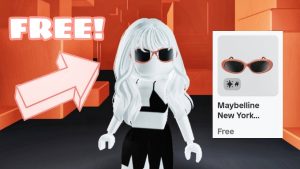
When Maybelline integrated its "Sunkisser" blush into the Roblox Paradise RP world, it wasn't advertising. It was creating functionality within a social system. The result: 25 million virtual trials and an average session time of 42 minutes.
3. Food: from sustenance to statement
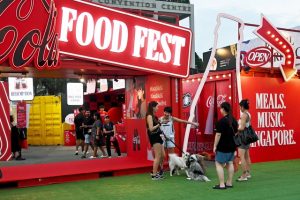 70% of Gen Z consider themselves "foodies." But that doesn't mean they go to Michelin-starred restaurants. It means they follow food creators, try trends they see on TikTok, and plan entire trips around specific restaurants.
When Coca-Cola sponsored the Yes, Chef! Food Festival in New York—an event created by influencer Jack Goldburg (@Jacksdiningroom)—it wasn't selling soft drinks. It was positioning itself within the emerging food culture. The result: 250 million media impressions.
4. Fashion: constantly changing identity
89% of American Gen Z say fashion is important for boosting confidence. But 62% prefer creators' analyses of fashion shows over official streams.
When Rihanna's Savage X Fenty opens flagship stores that feel more like fan events than traditional shops, it's acknowledging a truth: fashion isn't about buying clothes. It's about performing identity.
5. Niche IP and fan fiction: depth rather than breadth
70% of young fans say their fandom communities are part of their everyday lives. And often, the deepest fandoms aren't the most mainstream ones.
Archive of Our Own (AO3) now has 15.8 million fanfiction works. Crunchyroll, the anime platform, has surpassed 17 million paid subscribers. These are not niches—they are economies.
The emotional map of fandoms
One of the most fascinating findings in the report is the emotional mapping of fandoms. Ogilvy analyzed more than 20,000 data points and positioned different fandoms on two axes:
- Participation style: from “remix-friendly” to “highly protective”
- Emotional tone: from “comforting/gentle” to “chaotic/bold”
And what did they discover? Seemingly similar fandoms behave in radically different ways.
For example: Emma Chamberlain and Alex Cooper are often grouped together as influencers of the same generation. But their fandoms are completely different. Emma is in the "comforting and participatory" quadrant. Alex is in the "chaotic and protective" quadrant.
For brands, this means that it is not enough to know who fans follow. It is necessary to understand how they behave.
The three ways to join a fandom
The report identifies three fundamental pillars for brands that want to participate (not interrupt) fandoms:
1. Experiences: resolves friction, amplifies joy
It's not enough to just show up. You have to make life easier for your fans.
Hypothetical example from the report: What if Coca-Cola had been involved in Fred Again's surprise concert in New York? Instead of leaving 40,000 people waiting in a chaotic Twitch livestream, it could have helped streamline the ticketing process, reduce scalpers, and offer drinks at the venue. Result: less friction for fans, cultural relevance for the brand.
2. Access: it is not enough to watch, you have to participate
Fans don't want to be spectators. They want to be backstage.
Hypothetical example: What if Nike partnered with creators obsessed with the WNBA to create a "Tunnel Takeover" program? Superfans could style players for their entrance onto the court, submit edits on TikTok, and gain access to behind-the-scenes content. Nike would treat fans' creativity as accredited expertise.
3. Belonging: creating physical spaces for digital fandoms
Fandoms live online, but they crave physical moments.
Hypothetical example: What if Hilton expanded its “Stay Like…” platform with “Fan Stays”? Themed rooms created by superfans, for superfans. Taylor Swift rooms in Nashville, anime-inspired lofts in Tokyo, gaming suites in Berlin. Hilton would pay micro-grants to fans to help with the design, creating a physical network of belonging based on shared obsession.
What this means for Portuguese brands
It is natural to think: "This is all very interesting for Nike or Coca-Cola, but what about Portuguese brands?"
The truth is that principles are universal. Delta doesn't need to be on Roblox. But it does need to understand that young people who buy coffee today no longer respond to traditional advertising—they respond to creators, communities, and causes.
Super Bock doesn't need to sponsor the Met Gala. But it does need to understand that the way people connect with brands has fundamentally changed. It's no longer about broadcasting. It's about participation.
The question is no longer whether there is a budget to join fandoms. The question is much more about: is there humility enough not to control them?
The three golden rules
The report concludes with three principles that every brand should seriously consider:
- Don't chase the star, explore the subculture. Beyoncé didn't put Levi's into the culture—her fans did. The brand was already there, recognizable and remixable.
- Talk to the theory crafters, not the tourists. Fandoms thrive on detail, nuance, and winks. Not broad strokes.
- Give fans something to complete, not just consume. Fandoms don't want finished products—they want blank canvases and open worlds.
The question that remains
In the future (and that future has already begun), the brands that will grow are not the ones that shout the loudest. They are the ones that integrate more deeply into the communities that people already love.
The question isn't whether brands will enter fandoms. It's whether they will do so in a way that fans will celebrate... or reject.
And one thing is certain: they know perfectly well how to distinguish between the two.
* Fandom: A co-creative community built around a shared passion—for a person, product, or idea—where people express their identity, build relationships, and actively shape the evolution of the intellectual property itself.