AI Shopping: the future of shopping is not in your hands (literally)
For years, e-commerce has evolved with one clear goal: to simplify the consumer journey, reduce friction and increase conversions. UX, personalization, recommendations - the entire e-commerce industry has revolved around making the act of buying "easier". But what is now emerging with artificial intelligence (AI) is not a mere process improvement. It's a profound reconfiguration: if until now the challenge was how we navigate, the future will focus on who navigates for us.
Most people think that "AI shopping" will have little impact on most purchases. And, in a way, this is understandable: many of our consumption decisions are emotional, impulsive or brand-related. We have nostalgia for Heinz, pride in our Nespresso machine, a ritual when choosing perfumes. But this analysis overlooks something essential: AI will not replace the pleasure of choice - it will automate the annoyance of repetition. And that changes everything.
Delegation: the end of repetitive purchases
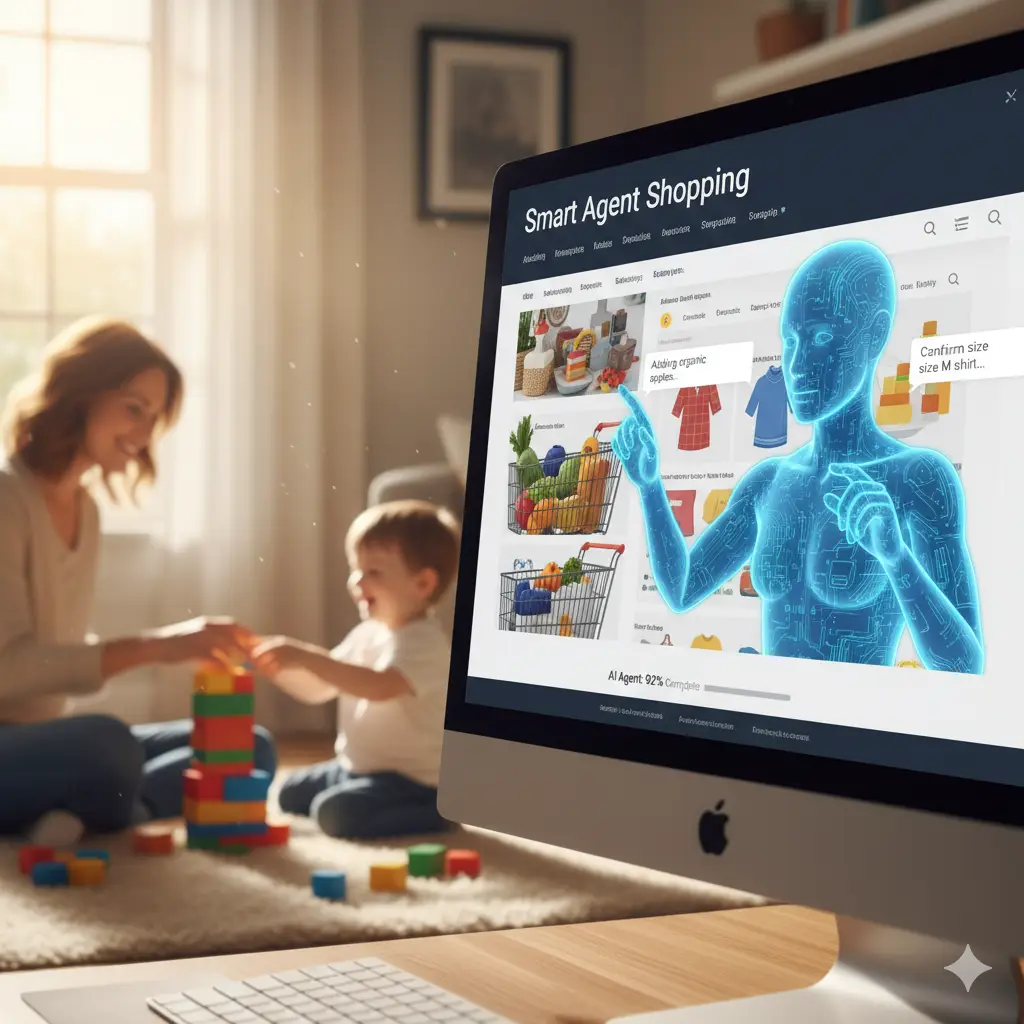
Imagine that all your routine purchases - from laundry detergent to coffee capsules - are handled by an intelligent agent. It's not a conversation with a boring chatbot, nor a fixed subscription. It's a system that knows you, learns your patterns and decides for you, with complete operational autonomy.
That's the first big move: delegation.
You don't want to go back to comparing prices or checking if the product is in stock. Your AI agent will do that - every day, in real time, based on your preferences and context:
- Read your list of past consumption.
- Identify future needs (before you remember).
- Compares alternatives based on price, time and quality.
- Executes the purchase, automatically choosing the most efficient supplier.
This model is not just convenience. It's cognitive transfer. The decision, which previously required your attention, becomes an optimized and autonomous system.
For brands, this paradigm is disruptive. It's no longer enough to be "known" - you have to be selectable. The focus is no longer on capturing the human eye, but on winning over the delegated algorithm. In other words, marketing is no longer competing for consumer emotion, but for algorithmic preference.
Arbitrage: the invisible market of machines
If delegation replaces the act of buying, arbitrage replaces the act of comparing.
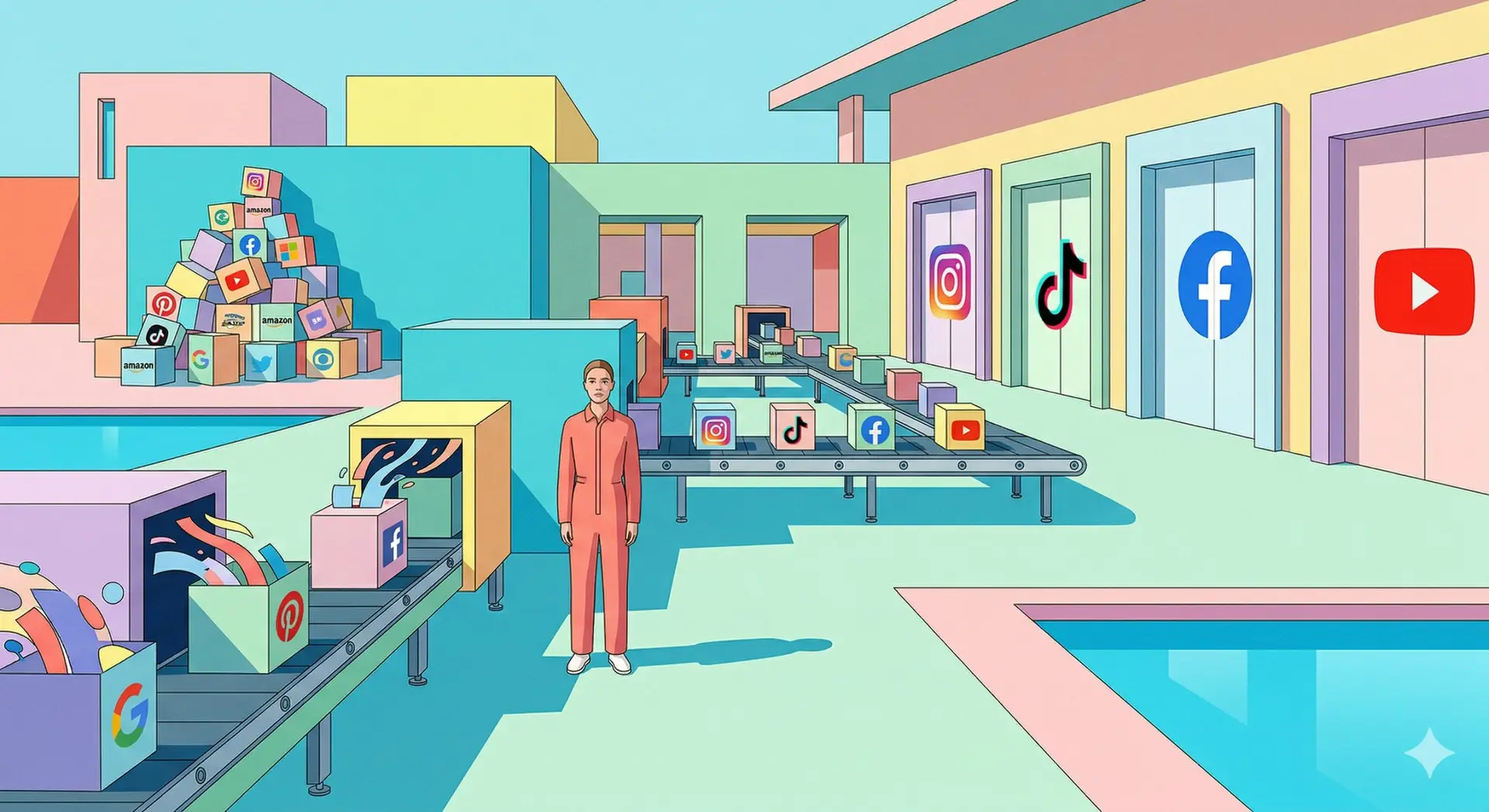
In the next few years, you won't be visiting Walmart.com, Continente.pt or Heinz.com. Your AI agent will do that, in its own name and on your behalf, trading on an automated marketplace.
AI doesn't just decide, it loops autonomous negotiations between platforms:
- It evaluates price, availability and delivery time in micro-seconds.
- It considers loyalty programs, sustainability and even the user's ethical preferences.
- Executes an "optimal" purchase without human intervention.
We are entering a scenario in which machines negotiate with machines - and the consumer becomes almost the CEO of their own consumer portfolio.
For the retail sector, this means a new battleground:
- Websites cease to be destinations; they become APIs accessible to AI agents.
- The brand is no longer competing for direct emotional influence, but for algorithmic optimization.
- Loyalty programs will have to be reimagined for agents, not humans.
Who buys: you or your Agent?
When AI starts shopping for us, the notion of the "shopping experience" changes completely. We move from human discovery to a delegated and automated experience.
But beware: this doesn't eliminate the pleasure of shopping - it just redistributes it.
- Emotional purchases (fashion, perfumes, lifestyle) will continue to be human, with an expressive and aspirational role.
- Rational or repetitive purchases (food, cleaning products, insurance, energy) will become automated.
The result is a hybrid economy in which we buy less, but buy better - because we delegate the trivial and reserve the emotional for what really matters to us.
Impact by sector
Not all sectors will evolve at the same speed. But they will all be affected.
1. Travel and accommodation:
This is the most fertile ground for this transition. Reservations, flights, local experiences—everything will be managed by AI, based on preferences and dynamic price optimization. Expedia and Booking will become invisible back-ends for intelligent agents.
2. Insurance and health:
Personal AIs will be able to compare policies, manage coverage, anticipate renewals, and even optimize health plans. The relationship with insurers will no longer be annual but will become continuous, adjusted by algorithms.
3. Energy and utilities:
With the rise of decentralized energy consumption, AI agents will be able to automatically negotiate contracts, switch suppliers, and manage home solar panels—maximizing savings without human intervention.
4. Food and daily retail:
Physical supermarkets will continue to exist, but not as we know them. For many products, consumers will no longer "choose" but will simply approve what their agent has selected. Brands will have to become more "readable" for algorithms and more transparent in their supply chain.
The new marketing: from humans to Agents
This is perhaps the most radical change.
Today, brands communicate with people. Tomorrow, they will communicate with AI models that filter, interpret, and decide.
How do you market to an agent?
- Structured, machine-readable data: brands will have to make their catalogs and descriptions semantically rich in order to be understood by decision-making systems.
- Non-symbolic attributes: sustainability, origin and efficiency will weigh more heavily than slogans.
- Algorithmic reputation: AI engines will create trust ratings based on real performance, reviews and consistency of delivery.
A good example is what already happens with Amazon and Google Shopping, where product descriptions and ratings determine positioning. In the future, this "ranking" will be defined not only by the platforms' algorithms, but by each user's personal purchasing agents.
A new consumer power
In a world of automated shopping, the power relationship shifts.
Until now, consumers were the "targets." In the future, consumers will be the employers of their own agents, and those agents will negotiate with the brands.
This creates a more meritocratic economy, where transparency wins out over emotional marketing. A brand that consistently delivers quality, a fair price and values compatible with the consumer's profile will gain prominence - not because it has told a good story, but because it has proven to be the best option on the basis of data.
The real impact on retail
To say that AI will have "little impact" on shopping is to ignore what is really at stake.
This is not an aesthetic or experiential revolution. It is a structural shift in power and decision-making:
- From individuals to delegated systems.
- From emotion to algorithms.
- From symbolic loyalty to measurable performance.
The future of AI shopping will not be about how we shop, but about who shops for us.
And when the choice is delegated, marketing becomes a conversation between intelligences—one human and one artificial—competing for the same goal: value and efficiency.