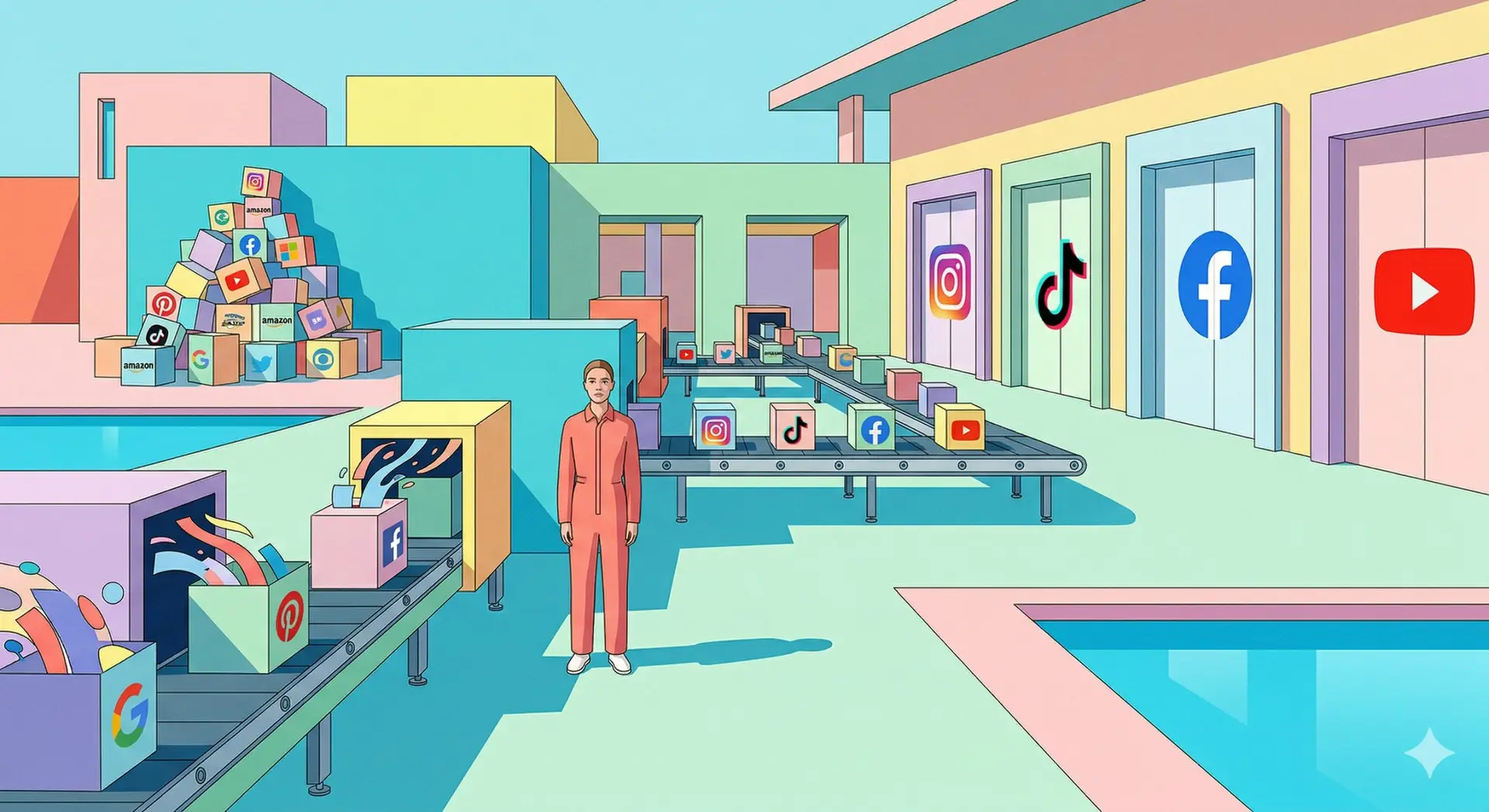

The web was made for humans. But... now that customers are AIs?
For decades, we've been building the internet for people. Websites designed like shop windows, endless forms, logins, captchas that force us to prove we're not robots. All this made sense in a world where only humans surfed.
But we are entering a new era: that of Artificial Intelligence agents. Assistants who don't just want to answer questions, they want to act. Book a table, buy a ticket, order a product, deal with a request for assistance. And suddenly, we realize the shock: the web we created for humans is a wall for these AIs.
Agents can't deal with captchas. They won't "click" buttons. They won't waste time on confusing UX. And worse: the same barriers that used to protect against malicious bots become obstacles for these new "smart customers".
Listen to this article
This is where MCP - Model Context Protocol.
MCP is, in practice, the "USB-C of Artificial Intelligence": a universal standard that allows AIs to interact with websites, services and applications in a secure, direct and official way. Instead of trying to mimic human clicks or smashing through security walls, agents now have their own channel - a digital service desk tailor-made for them.
For those who have a website with reservations, e-commerce or any online interaction, this changes everything.
Being invisible to Google was already a problem. Being invisible or inoperable for AI agents will be a sentence.
If you are ready for MCP
Your website is no longer just a set of pages for humans, but also a service usable by AIs. This means that, in the near future, when someone says to your digital assistant "book me a table for Friday at 8pm at that restaurant" or "buy me sneakers on site X", the AI can execute the request without friction.
The result? Your business remains visible, but above all, it remains usable.
If you're not ready
AI's answer may be simple: ignore your site. If the competitor has MCP, the booking goes to them, the purchase goes to them. Being invisible to Google was already a problem. Being invisible or inoperable for AI agents will be a sentence.
Who's already moving
This is not futurology. It's the present. A Anthropic launched MCP in open source in 2024. A Microsoft is integrating it into Windows so that AI assistants can access files and apps directly. Replit, Sourcegraph, Block e Wix have already announced support. Even OpenAI and DeepMind are lining up.
It's not an academic idea - it's a real race, with tech giants pulling the new standard.
The question is pragmatic
If before companies had to adapt to mobile, then to social networks, then to SEO... now the challenge is to make the site "agentic-ready". Because direct human traffic is going down. People will delegate to their AIs. And only sites prepared with MCP will be ready to receive this "new customer".
The future of the web is not just about being found. It's about being usable by artificial intelligences that will interact with us. Those who realize this early will have an advantage. Those who fall behind will find that their site is still beautiful to humans... but completely irrelevant to AIs (which perform tasks for humans).